


Personal Injury Trusts
Protecting your compensation and your benefits
If you rely on means-tested benefits or council-funded care, a personal injury trust stops your compensation counting against you. Call 020 7485 8811 to speak to a trust solicitor.

“The practice at Osbornes often acts for a wide range of HNW individuals and families on complex estate and trust cases, frequently dealing with cross-border estates.”

“A full service team which punches above its weight – dealing with a range of UK and international clients, it is a great option for those who would prefer a non-central London firm.”



Table of Contents
Osbornes Law’s trust solicitors set up and run personal injury trusts for people who have received compensation, including people who lack capacity and children.
After a serious injury, your compensation has to last. It may need to pay for care, equipment, adaptations to your home and lost earnings for years to come. If it sits in your own bank account, it counts as your savings, and that can reduce or end your means-tested benefits and help with care costs.
A personal injury trust keeps the money separate from your savings so that it is ignored in those assessments. Our trust lawyers work alongside your personal injury solicitor so the trust is ready when your compensation is paid.
There is more than one way to protect an award. The right choice depends on whether you can manage your own affairs, your age, how much the award is and what it needs to pay for. We explain the options below.
What is a personal injury trust?
A personal injury trust is a trust that holds money paid to you because of an injury. This includes court awards, out-of-court settlements, interim payments and Criminal Injuries Compensation Authority awards.
The money is held by trustees (the people who look after it) for you as the beneficiary (the person it is for). It is kept in a separate trust bank account, not mixed with your own money.
The law treats compensation held this way differently from savings:
- For Universal Credit, the capital in a personal injury trust and the income it earns are ignored (regulation 75 of the Universal Credit Regulations 2013).
- For the older means-tested benefits, such as income-related Employment and Support Allowance and Housing Benefit, the value of the trust is also ignored.
- For council care charges in England, the value of a personal injury trust is ignored when the council assesses what you must pay towards your care.
Do I need a personal injury trust?
You are likely to need one if you receive, or may later claim, any of these:
- Universal Credit
- income-related Employment and Support Allowance or income-based Jobseeker’s Allowance
- Income Support
- Housing Benefit
- help from your council with the cost of care
Universal Credit stops if your savings are over £16,000, and it is reduced once they pass £6,000. A modest award held in your own account can therefore have a real effect on your income.
You may not need one if you only receive benefits that are not means-tested. These include Personal Independence Payment, Disability Living Allowance, Attendance Allowance, contribution-based (new style) Employment and Support Allowance and the State Pension. Savings do not affect these.
Even then, a trust can still be worth having if you think you may need means-tested support or council-funded care in the future. Pension Credit has its own rules, so tell us if you receive it.
How long do I have to set up a personal injury trust?
There is no deadline for setting up the trust itself. The time limit is on how long your compensation is ignored for benefits while it sits in your own account. The rule depends on which benefit you receive.
Universal Credit
A personal injury payment that is not in a trust is ignored for 12 months from the date it is paid to you. Each payment is looked at separately. For example, if you receive an interim payment now and a final settlement a year later, each gets its own 12 months.
Older means-tested benefits and care charges
For income-related Employment and Support Allowance, Income Support, Housing Benefit and council care charges, the rule is stricter. Compensation in your own account is ignored for 52 weeks from the day you receive the first payment for that injury. Later payments for the same injury do not get a new 52 weeks.
This means an early interim payment starts the clock for the whole claim. For council care charges, any part of an award that a court has specifically set aside for the cost of care can be counted even within those 52 weeks.
When to act
We recommend setting up the trust before your first payment arrives, so the money can go straight into it. If you have already received your compensation, or have mixed it with your own savings, speak to us. A trust can usually still be set up, but the sooner you act the less your benefits are at risk.
What types of personal injury trust are there?
The right structure depends mainly on whether you can manage your own money, and how much control you want.
Bare trust
A bare trust is the simplest form. You are entitled to all of the money, and you can ask the trustees to pay any of it to you, or to spend it for you, at any time. You can be one of the trustees yourself.
This suits most adults who can manage their own affairs and want to stay in control. Income tax and capital gains tax are charged as if the money were yours.
Discretionary trust
In a discretionary trust, the trustees decide when to pay money out and how much. You cannot demand payments.
This gives more protection if you are vulnerable, could be pressured by others, or may find it hard to manage a large sum. It also means the trust can carry on helping you if your health changes. The tax treatment is different from a bare trust, and we explain it before you choose.
If the injured person lacks mental capacity
Some people, for example after a severe brain injury, cannot make decisions about their money. They cannot set up a trust themselves.
In that case, the Court of Protection usually appoints a deputy to manage the compensation. The court can also authorise a trust to be set up for the injured person under the Mental Capacity Act 2005. We advise families and deputies on which route is better, and make the application to the court.
If the injured person still has capacity but expects to lose it, a Lasting Power of Attorney can sit alongside the trust.
Compensation for a child
A settlement for a child must be approved by the court before it is valid. The court then decides how the money is held. It is often invested by the court and paid to the child at 18, although the court can make other directions.
Money held and controlled by the court in this way is ignored for Universal Credit, in the same way as a trust. Before the money is released, it is worth planning whether a trust is needed, particularly if the young person may claim means-tested benefits as an adult.
Trusts for disabled beneficiaries
Where the beneficiary of a discretionary trust is disabled, the trustees can usually make a vulnerable person election with HMRC. This means the trust pays income tax and capital gains tax at the beneficiary’s own rates rather than the higher trust rates. The trustees and the beneficiary both sign HMRC’s form VPE1. See HMRC’s guidance on trusts for vulnerable people for who qualifies.
Who should be a trustee?
Trustees must keep the trust money separate, keep records and act in the beneficiary’s interests. Our guide to the duties of trustees explains what this involves.
A trust holding only money can legally have one trustee. We usually recommend at least two, so that decisions are shared and the trust keeps running if one trustee dies or steps down. If the trust buys a property, at least two trustees (or a trust company) are needed to sell it later.
Trustees are often family members or close friends. A professional trustee, such as a solicitor, can be added for large awards or where family relationships are difficult.
What can I spend the money on?
Trust money can be spent on anything that benefits you. Common examples are:
- care and support at home
- rehabilitation, therapy and treatment
- specialist equipment and mobility aids
- a car or adaptations to a vehicle
- buying or adapting a home
- holidays, education and day-to-day living costs
Once money is paid out of the trust into your own account, it counts as your savings again. It is usually better for the trustees to pay bills directly, or to pay you only what you need at the time. If you claim means-tested benefits, the benefits office or council may ask about large payments, so the trustees should keep receipts.
What are the disadvantages of a personal injury trust?
A trust protects your benefits, but it does bring some extra work and cost:
- The trustees must open and run a separate bank account and keep records of every payment.
- With a discretionary trust, you do not control when money is paid out.
- Trustees may need to complete tax returns, and professional trustees charge for their time.
- Ending a trust or changing trustees needs paperwork.
For most people who rely on means-tested support, these costs are small compared with the benefits and care funding the trust protects.
How much does a personal injury trust cost, and can I set one up myself?
It is possible to set up a simple bare trust yourself using a trust deed. The risk is that a badly drafted deed, or money paid into the wrong account, leads to your benefits being stopped while the problem is sorted out.
The cost of using a solicitor depends on the type of trust and whether a court application is needed, for example for someone who lacks capacity. We explain our fees in writing before we start.
How we can help
Our trust and personal injury lawyers work as one team. We can:
- advise you on whether you need a trust and which type suits you
- prepare the trust deed and open the trust account before your compensation is paid
- act as professional trustees, or support family trustees with their duties
- apply to the Court of Protection where the injured person lacks capacity
- review an existing trust if your circumstances or your benefits change
We act for people with serious injuries, including spinal injuries and catastrophic injuries. We can set up a trust whether or not we handled your claim.
Speak to a personal injury trust solicitor
Call us on 020 7485 8811 or fill in the contact form below.
FAQs about personal injury trusts
Do I need a personal injury trust if I only get PIP?
Usually not. Personal Independence Payment is not means-tested, so your savings do not affect it. A trust is still worth considering if you may need Universal Credit or council-funded care in the future.
How long do I have to set up a personal injury trust?
There is no deadline for the trust itself. For Universal Credit, compensation in your own account is ignored for 12 months from each payment. For older means-tested benefits and care charges, it is ignored for 52 weeks from the first payment for that injury. Setting up the trust before any money arrives is safest.
Can I put my compensation in a trust if I have already spent some of it?
Yes. You can put whatever compensation you still have into a trust. Keep records showing where the money came from, especially if it has been mixed with your own savings.
Can I be a trustee of my own personal injury trust?
Yes. With a bare trust, you can be one of the trustees alongside someone you trust. We usually recommend at least two trustees.
What happens if I don't set up a personal injury trust?
Once the time limit for your benefit has passed, your compensation is treated as savings. This can reduce or stop means-tested benefits, and you may have to pay more towards your care.
Can a personal injury trust be set up for a child?
A child’s settlement must be approved by the court, which often invests the money until the child is 18. That money is ignored for Universal Credit while the court holds it. A trust can be planned for when the money is released.
Does a personal injury trust need to be registered with HMRC?
Some trusts must be registered on HMRC’s Trust Registration Service. Our guide on whether you need to register your trust explains the rules, and we can check this when we set up your trust.
Road Accident Claim Client StoriesVIEW ALL
 2.11.2026
Self-Driving Car Accidents: Who Pays If You Are...
In September 2026, Uber started offering self-driving taxi rides in London. The cars are driven by software from Wayve, a British...
Read more 28.10.2026
A piece of Italian cycling history brought back...
Displayed in the window of our Hampstead office, this beautifully restored 1979 Alan Super Record road bike is more than a...
Read more- 13.10.2026
Innovations in Urban Cycling from Europe: LCC Event, 22...
Osbornes Law and London Cycling Campaign bring European cycling innovators to London for a one-night-only event Osbornes Law and the...
Read more - 8.9.2026
Getting Back on Your Bike After an Accident
Summary: We have partnered with clinical psychologist Dr Patapia Tzotzoli to address a challenge many cyclists face after a collision:...
Read more  29.7.2026
E-Bike and Cycle Safety: Sam Collard on Good...
E-Bike and cycle safety in the spotlight: Sam Collard speaks out on Good Morning Britain and ITV News Osbornes Law’...
Read more- 3.7.2026
Case Study: Cyclist broke both elbows and jaw...
Greg Simmons, 36, was cycling in Edmonton, North London in February 2025 when his wheel struck a plastic lane divider in a...
Read more - 30.6.2026
Osbornes Law Supports Islington Cycling Club Fundraiser
How we helped Islington Cycling Club reach their £20,000 fundraising target for Spinal Research after member is paralysed in cycling accident...
Read more - 19.6.2026
Case Study: Brachial Plexus Injury After a Motorcycle...
A short ride to work changed our client’s life in seconds. As an experienced motorcyclist made his way along...
Read more - 15.6.2026
Six Figure Settlement After Machinery Accident
Securing a six figure settlement for a Romanian worker following a devastating machinery accident Our client, Mr D, a Romanian...
Read more - 23.3.2026
What Is Contributory Negligence?
In this guide, we explain what contributory negligence means, how courts assess it, common situations where it arises, and what...
Read more - 5.3.2026
Six-Figure Settlement for Pedestrian Struck at Zebra Crossing
Eloise Mears, a personal injury solicitor at Osbornes Law, recently secured a six-figure settlement for her client, Mr S, following...
Read more  2.3.2026
7-figure Settlement in Fatal Cycling Accident Claim involving...
Devastating loss after a fatal road traffic collision Losing a loved one in a sudden road traffic accident is overwhelming....
Read more- 18.2.2026
Cyclist Awarded £30,000 After Being Struck by Turning Car
A cyclist has been awarded £30,000 in compensation after being struck by a car that turned across his path during a...
Read more - 17.2.2026
What is an Interim Payment?
Summary: Interim payments are advance payments made before your personal injury claim settles They provide financial support for urgent costs...
Read more  25.11.2025
£800,000 Compensation for Injured Construction Worker
£800,000 compensation secured for injured construction worker after career-ending hand injury When a hardworking 35-year-old construction worker suffers a life-changing injury...
Read more- 6.11.2025
Osbornes Law Sponsors the Urban Hill Climb 2025
On 900 metres of brutally steep roads, cyclists of all kinds came together to conquer Swain’s Lane the legendary climb...
Read more - 5.11.2025
Case Study: £12 Million Compensation for Paralysed Motorcyclist
Summary: In October 2025, a motorcyclist received £12 million in compensation for life-changing injuries sustained in a 2020 accident that left him tetraplegic....
Read more - 4.11.2025
Rise in Severe Orthopaedic Injuries Caused by E-bike...
The specialist personal injury team at Osbornes Law represents clients seeking compensation for e-bike injuries. Accidents involving e-bikes have led...
Read more - 28.10.2025
Osbornes Law partners with Nip Nip Bike Workshop
Osbornes Law partners with Nip Nip Bike Workshop to support London’s cyclists Osbornes Law has partnered with Nip Nip...
Read more - 27.10.2025
Forest Bike Accident Sparks Calls for Insurance Law...
Forest bike crash prompts calls for insurance reform A cyclist who was eight hours from death after colliding with a...
Read more  21.10.2025
Industrial Bread Machine Crushes Woman’s Arm
Woman suffers life-changing workplace injury after arm is crushed in bread machine Nicola Hall is supporting a young woman in...
Read more- 15.10.2025
Faulty Lime Bikes Spark Wave of Legal Action
Bike rental company Lime is facing a wave of legal action after riders suffered serious injuries when their bikes fell...
Read more  22.9.2025
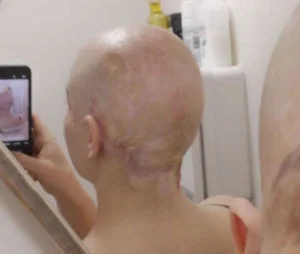
Young Mum Secures 7-Figure Payout After Workplace Accident
A young mum who was left with life-changing injuries after her scalp and ear were ripped off in a horrific...
Read more- 9.7.2025
Warehouse Worker Fights Aldi’s False Dishonesty Claims
Aldi’s worker suffers ‘mental torture’ after the supermarket giant falsely accuses him of lying In a shocking case that...
Read more


















Personal Injury Accreditations

Jenny Walsh is very capable and experienced.
Jenny Walsh is adept at covering diverse issues, such as estate administration, the resealing of foreign grants of probate, as well as advising on lasting powers of attorney.
Jenny Walsh is a stand out partner who has taken on many cases and assisted urgently where required so her responsiveness and expertise is particularly notable.
Jenny Walsh is a full member of STEP and a key figure who specialises in non-contentious private client matters, often with a cross-border dimension.


