
Stillbirth Compensation Claims
Our Lawyers Can Help You Claim Compensation
If you have suffered a stillbirth call our team today on 020 7485 8811 for more information about making a stillbirth compensation claim. Our medical negligence solicitors can help you through your claim and give you the support you need.

“Osbornes Law is an established firm which handles a breadth of complex and high-value clinical negligence matters.”

“Osbornes handles a wide range of high-value and complex clinical negligence cases, with particular expertise in birth injury, delayed cancer diagnosis, spinal injury, and fatal claims.”

Table of Contents
What is a stillbirth?
A stillbirth happens when a baby dies in utero and is born dead after 24 weeks of pregnancy. If this event happens prior to the 24 week period it is known as a miscarriage or late foetal loss.
Why do stillbirths happen?
The cause of stillbirth may be related to
- Problems with the placenta
- Bleeding before or at the time of labour
- Pre–eclampsia ( this causes high blood pressure during the pregnancy)
- Cord prolapse (umbilical cord wraps around the baby’s neck or comes out of the womb before the baby is born)
- Obstetric cholestasis/intrahepatic cholestasis
- Maternal diabetes
- Genetic defect
- Infection
- Multiple pregnancies
- Restricted growth in utero
- Maternal Age
- Maternal drug and alcohol abuse
- Maternal smoking
- Obesity
- Eating uncooked meat or poultry or foods that are not to be eaten during pregnancy
If these issues are raised by the mother and no action is taken by the midwife, GP or hospital and a stillbirth occurs that could have been prevented then there is potential for a claim to be instigated by the mother.
When Can You Make a Stillbirth Compensation Claim?
Not all stillbirths are caused by negligent care, to make a claim our birth injury solicitors must usually show that the medical professionals involved breached their duty of care and that this breach directly led to the stillbirth. If you believe that your child’s death was the result of negligent care, you may be able to make a claim for medical negligence. Examples of common grounds for stillbirth compensation claims include:
- Situations where there were errors in prenatal care
- Delays in delivery that cause oxygen deprivation
- Failure to diagnose or treat conditions like pre-eclampsia
- Errors made when performing an emergency caesarean section
- Inadequate interpretation of test results during pregnancy
- Failures to record the birth as high-risk when it should have been
- Failure to refer mothers for essential tests or check-ups
- Communication issues, especially for non-English speakers resulting in the mother failing to receive the treatment they needed
How Long Do You Have to Make a Claim?
You have 3 years to make a claim. This will be calculated either from the day you received the negligent care, or when you discovered that negligent treatment was responsible for the stillbirth.
Investigating a stillbirth
Claims relating to stillbirth can be harrowing and the parents of the stillborn child will have to relive the events leading up to and at the time of the stillbirth again. It is very traumatising and can lead to post traumatic stress syndrome (PTSD) yet it is something that sometimes needs to be done so that further information can be gleaned about why the event happened. An investigation may be carried out by the NHS trust where the stillbirth occurred and answers to parental concerns will be sought.
If it can be shown that the stillbirth occurred due to negligent medical care then a claim can be investigated and pursued. Any claim must be pursued within 3 years of the date of the stillbirth. Claims outside this timeframe will be statute-barred.
It is always prudent to pursue a claim as soon as possible after the negligent medical care as the medical records, doctors’ records, nursing records and other relevant records will be more difficult to trace the longer it is since the events, especially if the treating doctor has retired or moved hospital. This also makes it harder for the Defendant to obtain witness evidence and may make it difficult for the case to be pursued.
How can the risk of stillbirths be reduced?
Antenatal checks will be made at various times during the pregnancy and these antenatal appointments will be carefully organised. At each antenatal appointment, a midwife will carry out various tests and investigations to check the mother’s health and to ensure that the pregnancy is going to plan. Blood tests are carried out at some of these antenatal appointments, blood pressure, weight is checked and urine samples are tested. The girth of the abdomen is also checked to ensure that the baby is growing as it should.
It is usual during a woman’s first pregnancy to have up to 10 antenatal appointments. If it is not the woman’s first pregnancy she will have 7 antenatal appointments.
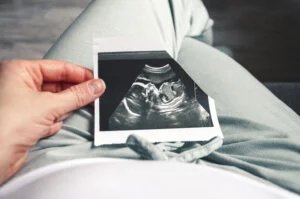
Scans will be carried out between 8 – 14 weeks of the pregnancy to check the estimated date of delivery of the baby. Further scans are carried out between 18 – 21 weeks to check the physical development of the baby but it cannot pick up every condition. It can estimate the size of the baby and if any conditions are found at the time of this scan then a further scan can be organised.
Other than that, the only other checks made during the antenatal period to ensure the baby is healthy is if the mother notices any changes during her pregnancy, such as reduced fetal movements after 24 weeks, vaginal bleeding, ongoing headaches, dizziness or vomiting and it is for her to alert her GP or midwife to any concerns that could relate to stillbirth. If a baby is smaller than it should be or stops growing at any point of the pregnancy this should be a significant finding as well.
Why choose Osbornes Law?
At Osbornes we have acted for many families, in clinical negligence obstetric/antenatal claims and stillbirth claims. It can often be very stressful for the parents of a stillborn baby to cope with the aftermath of the injury and to deal with the litigation at the same time as dealing with day to day issues such as caring for other children they have and taking the decision to become pregnant again.
Cases involving the death of a baby can be devastating and we recognise the need to provide support and empathy as well as straightforward and sensible legal advice at such a time. We are very experienced in dealing with these types of claims. Call 020 7485 8811 or fill in the contact form below to speak to a specialist.
Additional resources
- In addition to NHS complaints procedure and the civil litigation, there is the Health and Safety Investigations Branch (HSIB).
- Read this blog post for further information on Parental Bereavement Leave & Pay.
- Doppler Scans could prevent half of stillbirths
Related services
We specialise in serious birth injury claims, including:
FAQs
How could Doppler scans reduce stillbirth rates?
A Doppler scan is a simple, non-invasive scanning technique used to measure blood flow, particularly between the placenta and the unborn baby. It can often be performed alongside a routine ultrasound scan.
Doppler scans help detect issues with blood flow and placental function early in pregnancy, which are major risk factors for stillbirth. Early identification allows healthcare providers to manage these risks proactively.
Currently, Doppler scans are routinely offered primarily to women with pregnancies classified as high-risk. Advocates suggest extending routine Doppler scans to all pregnant women.
What are the links between ICU admission during pregnancy and stillbirth?
Studies show that women admitted to intensive care during pregnancy face a significantly higher risk of stillbirth. One study found that 1 in 16 women admitted to intensive care experienced a stillbirth, compared to 1 in 167 for those not admitted.
Speak to us about a Stillbirth Compensation Claim
Call us 020 7485 8811
For all new enquiries, please submit your details via the contact forms on our website. This will ensure your query reaches the right team and is handled promptly.
Jodi Newton is prominent in birth injury work and has taken a leading role in claims connected to the Addenbrookes paediatric orthopaedic surgery review.
Elline Demetriou is building a strong practice as a clinical negligence solicitor, handling a wide variety of cases including delayed diagnosis, surgical negligence and birth injuries.
The team has particular expertise in cases stemming from delays in diagnosis as well as surgical injury and wrongful birth claims.
They know the law inside out and proactively work with counsel to drive cases forward. They are a go-to for complex claims.
Osbornes handles a wide range of high-value and complex clinical negligence cases, with particular expertise in birth injury, delayed cancer diagnosis, spinal injury, and fatal claims.
I am always happy to get instructions from Osbornes. They have excellent quality work, the team knows exactly what they are doing and are a real pleasure to work with. Excellent legal knowledge.
The team has excellent leadership and provide an above and beyond service for their clients.
A close knit team with excellent knowledge and technical acumen across the board.
You get a real sense that they care about clients and each other, working together to get the best results.
The team works very well together as they are genuinely kind and friendly people.
Jodi Newton holds over 20 years of experience in birth and surgical injury cases, including those pertaining to cerebral palsy, negligent treatment of sepsis, and negligent A&E treatment.
The team handles a host of complex maternal claims, including cognitive injuries as a result of delayed birth treatments, cerebral palsy, and vaginal mesh litigation.

Stillbirth Claims Insights & Client Stories VIEW ALL
 26.6.2026
NHS Maternity Failures: Nottingham Ockenden Report 2026
Nottingham maternity negligence: what the Ockenden Report means for affected families The Independent Maternity Review into maternity services at Nottingham...
Read more 20.4.2026
Sussex maternity review: scope confirmed and more than 1,000...
First published 15 April 2026 · Updated 22 May 2026 In April 2026, the government announced that senior midwife Donna Ockenden would lead an independent review...
Read more 3.3.2026
New Report Exposes Fundamental Failures in NHS Maternity...
Baroness Amos’ interim report lays bare a maternity system “not working for women, babies and families.” Last week the government-commissioned...
Read more- 19.2.2026
Supreme Court Allows Children to Claim Lost Years...
Landmark Supreme Court ruling: children can now claim lost years compensation for medical negligence On 18 February 2026 judgment was handed down...
Read more - 3.12.2025
Liability Secured for Child with Cerebral Palsy
Full admissions of liability secured on behalf of child with quadriplegic cerebral palsy Jodi Newton, Partner in our Medical Negligence...
Read more - 28.10.2025
Liability Settlement Secured in High Court Wrongful Birth...
Supporting Ellie’s future: High Court settlement in wrongful birth case Nicholas Leahy, Senior Associate in the Medical Negligence team...
Read more - 27.8.2025
HSSIB Review Exposes NHS Maternity Failures
Patient safety body HSSIB publishes exploratory review of maternity and neonatal services As Head of Paediatric and Birth Negligence cases...
Read more  26.8.2025
Five-figure settlement after avoidable stillbirth at University Hospitals...
The parents of a baby girl who was stillborn at the Royal Sussex County Hospital have secured a five-figure settlement...
Read more- 6.5.2025
Six-Figure Settlement for Negligent C-Section Delivery
Osbornes secures a six-figure settlement following a negligent caesarean section delivery Jodi Newton, Partner and head of our Obstetric and...
Read more  14.10.2024
Multi-Million Settlement in Cerebral Palsy Negligence Case
Judge awards multi-million settlement in cerebral palsy medical negligence claim Jodi Newton, Partner and specialist medical negligence lawyer at Osbornes...
Read more- 19.9.2024
Report highlights failings in maternity care
The Care Quality Commission (CQC) has recently carried out a national review of 131 maternity inspections between 2022 and 2024, finding that failures...
Read more  28.6.2024
£55,000 Settlement for Stillbirth Claim Against Chelsea and Westminster...
Successful Settlement for Stillbirth Claim Against Chelsea and Westminster Hospital NHS Foundation Trust Background Nick Leahy, an Associate in our...
Read more- 5.1.2024
Delayed Pre-Eclampsia Diagnosis Results in Loss of Baby
Introduction to the case Nick Leahy, Associate in our Clinical Negligence department, has recently settled a birth injury claim against...
Read more  23.11.2023
Claim against Bradford Teaching Hospitals NHS Foundation Trust
High-risk pregnancy following previous miscarriage Osbornes acted for a Claimant, C, in her birth negligence claim against Bradford Teaching Hospitals...
Read more- 26.9.2023
Maternity and Neonatal Scandals: Lessons Learned
Will investigations into NHS maternity services lead to real change? Over the past 15 to 20 years, NHS maternity services have come...
Read more - 31.8.2023
Hyponatraemia – Symptoms, Causes & Negligence
What is hyponatraemia? Hyponatraemia is a condition where sodium levels fall below a certain level, which can be dangerous. All...
Read more - 23.3.2023
Private Pregnancy Scans and Substandard Care
In the news, it has been reported that private clinics that offer pregnancy scans to women are not meeting the...
Read more - 9.2.2023
Perineal tear claim settles for 6-figure sum
Successful claim for mother with third-degree perineal tear Osbornes Law recently settled a birth injury claim for a woman who...
Read more  2.10.2022
Tragic Case Involving a Home Water Birth
Introduction to the case Nicholas Leahy is acting for a young woman who had a water birth at home and...
Read more 8.9.2022
Poor interpretation of CTG can result in stillbirth...
Poor interpretation of a Cardiotocograph, more commonly known as a CTG, is a leading cause of stillbirth and brain injuries...
Read more- 2.9.2022
Mother & Baby Suffer Life-changing Injuries
Claim after mother and baby suffered life-changing injuries during birth Jodi is acting for both mother and baby in a...
Read more - 23.5.2022
Uterine Rupture Claim Against King’s College Hospitals
Significant settlement in uterine rupture claim The birth injury solicitors at Osbornes Law recently secured a significant settlement for a...
Read more - 27.1.2022
Six-figure claim allows family to move home
Six-figure compensation payment for a client Jodi Newton has secured a six-figure compensation payment for her client with cerebral palsy....
Read more - 24.1.2022
Likely settlement of £15-20 million
A client who suffered cerebral palsy injuries at birth was awarded £200,000 as an interim payment in a claim against NHS...
Read more