


Lung cancer misdiagnosis claims
Trusted specialists with a track record in cancer claims
Our lung cancer claims often start with a chest X-ray that was never arranged, or a scan result that was never followed up.

“Osbornes handles a wide range of high-value and complex clinical negligence cases, with particular expertise in birth injury, delayed cancer diagnosis, spinal injury, and fatal claims.”

“Osbornes Law is an established firm which handles a breadth of complex and high-value clinical negligence matters.”



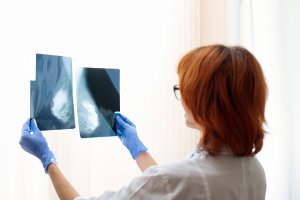
A clear chest X-ray does not always rule out lung cancer. NICE’s referral guideline reminds GPs that chest X-rays can give false-negative results, and that patients whose symptoms persist or get worse should be reviewed rather than simply reassured.
Our medical negligence team, which handles clinical negligence claims against NHS and private providers, can tell you whether the delay amounts to a claim. We will assess the records without obligation and act on a no win no fee basis. Our delayed cancer diagnosis work is recognised by Legal 500 2026 and Chambers UK 2026.
When the right tests were not arranged
NICE guideline NG12 is the standard your GP is measured against on suspected cancer referrals. For lung cancer, it sets out when a GP should arrange an urgent chest X-ray and when they should refer straight to a specialist on the suspected cancer pathway. These thresholds are regularly missed in primary care.
NG12 says a GP should offer an urgent chest X-ray, which means within two weeks, to anyone aged 40 or over with two or more of these unexplained symptoms. For anyone aged 40 or over who has ever smoked, one symptom is enough.
- cough
- fatigue
- shortness of breath
- chest pain
- weight loss
- appetite loss
A suspected cancer pathway referral is expected for anyone aged 40 or over with unexplained haemoptysis, which means coughing up blood, and for anyone whose chest X-ray suggests lung cancer. On that pathway, cancer should be diagnosed or ruled out within 28 days.
NG12 also tells GPs to consider an urgent chest X-ray for anyone aged 40 or over with a persistent or recurrent chest infection, finger clubbing, swollen lymph nodes above the collarbone or persistently in the neck, chest signs consistent with lung cancer, or a raised platelet count. Many GP negligence claims involve repeated consultations for the same symptoms, and course after course of antibiotics, without a chest X-ray ever being arranged.
Why a “clear” chest X-ray is not the end of the story
Plain chest X-rays miss a meaningful proportion of early lung cancers. Tumours behind the heart, at the top of the lung, or smaller than around one centimetre can be hard to see on an X-ray but show clearly on a CT scan.
NG12 reminds GPs to be aware that chest X-rays can give false-negative results. A normal X-ray does not exclude lung cancer where red-flag symptoms persist. Those patients should be reviewed, and a GP who remains concerned can seek specialist advice or refer.
We also see cases where the X-ray was not, in fact, clear. The British Thoracic Society guidance on pulmonary nodules recommends follow-up scans at intervals that depend on the size and appearance of the nodule. A small nodule reported on an X-ray or CT scan and then never followed up is one of the most common patterns of negligence in this area.
By the time the patient comes back with worse symptoms, the nodule may have become a stage 3 or stage 4 tumour.
When NHS lung cancer screening should have caught it
The NHS lung cancer screening programme, which grew out of the Targeted Lung Health Check, is being rolled out across England. It started in areas with higher lung cancer rates and is not yet available everywhere. It is for people aged 55 to 74 who are registered with a GP and smoke or used to smoke.
Anyone assessed as high risk is offered a low-dose CT scan, designed to find lung cancer early, when treatment is most likely to succeed. People whose scans show small nodules may be invited back for more frequent scans.
We are starting to see claims where a patient in an area covered by the programme was wrongly left out, where a high-risk assessment was not followed by a scan, or where a nodule found on a screening scan was lost between the screening service and the local hospital. A missed recall scan can be just as serious.
Where screening should have found the cancer early and it was instead diagnosed at stage 3 or 4, there may be a strong claim. Each case depends on the records and on expert evidence.
What a lung cancer misdiagnosis claim needs to establish
A claim does not exist simply because something went wrong. We have to prove two things side by side.
The first is breach of duty. We have to show the care you received fell below what a reasonably competent GP, radiologist or respiratory physician would have provided. NICE NG12, the British Thoracic Society pulmonary nodule guidance and the Royal College of Radiologists reporting standards are the benchmarks.
Recognised examples of poor care include:
- repeated antibiotics for a smoker’s recurring chest infection, with no chest X-ray
- coughing up blood that was not urgently referred
- a lesion at the edge of the lung missed on a chest X-ray
- a small nodule reported but never followed up
The second is causation. Even where the care was poor, you only have a claim if earlier diagnosis would have changed your prognosis or treatment. This is where most lung cancer cases turn. We instruct independent respiratory physicians, thoracic surgeons and oncologists to compare what your treatment and outcome would have been at the missed appointment with what they are now.
How the stage of diagnosis affects treatment and prognosis
Stage at diagnosis decides what treatment can do.
Caught early, at stage 1 or 2, lung cancer can often be removed by surgery, either an open lobectomy or a less invasive video-assisted thoracoscopic surgery (VATS) procedure. The intent is curative. Many patients return to normal life within months.
Caught late, surgery is often no longer possible. The plan becomes a combination of platinum-based chemotherapy, immunotherapy such as pembrolizumab, radiotherapy, and in some cases palliative care to manage breathlessness, pain and weight loss.
For some patients the delay turns a survivable cancer into a fatal one, and we also act for families in fatal medical negligence claims. Where lung cancer is identified early, surgery with curative intent is often possible. A later diagnosis may mean treatment can only manage the disease rather than remove it. That distinction is central to both the claim and the compensation.
What lung cancer misdiagnosis compensation typically covers
Where negligence contributed to a late lung cancer diagnosis, compensation typically covers both the direct impact on health and the financial consequences that follow.
In practice that includes:
- loss of earnings where the delayed diagnosis has stopped you working or shortened your working life
- the cost of private treatment you would not have needed had the cancer been caught earlier, including immunotherapy not available locally on the NHS
- care, oxygen equipment and home adaptations needed because of advanced disease or treatment side effects
- travel costs for hospital appointments and oncology visits
- future losses, including pension shortfall and earnings lost because life expectancy has been shortened, and claims by dependants where the patient has died
Our cancer misdiagnosis solicitors have recovered six-figure settlements in delayed cancer diagnosis claims. The figure in any individual case depends on the stage of cancer at the missed appointment, the stage at diagnosis, and the impact on the patient and family.
★★★★★“Nicholas Leahy at Osbornes Law was a great help during a very difficult time for me and my family. He fought very hard for us and was always there for if we need advice. We as a family are happy with the compensation they managed to get for us.”
How long do you have to make a lung cancer claim?
You usually have three years to start a claim. The three years run from the date of the harm, or from the date you first knew that you had suffered a significant injury and that it may have been caused by something your doctors did or failed to do, if that is later.
You do not need to know that the care was negligent for the three years to start. Different rules apply in some cases:
- Children: the three years do not start until the child turns 18.
- Lack of mental capacity: if the injured person lacked capacity when the harm happened, the three years do not start until they regain it.
- Claims after a death: the family usually has three years from the date of death, or from the date they first knew the death may be linked to poor care. A claim cannot be brought if the person who died was already out of time.
The court also has a limited power to allow a claim after the three years have passed, but you should never rely on it. Speak to us as soon as you can.
Speak to a lung cancer misdiagnosis lawyer today
If you believe your lung cancer, or that of a partner, parent or relative you have lost, was missed, misdiagnosed or diagnosed too late, our medical negligence lawyers will review the case in confidence and without obligation. We act on a no win no fee basis, and we can tell you which time limit applies to you.
Call 020 7485 8811 or fill in the contact form below.
Lung cancer claims FAQs
What symptoms should prompt a GP to order an urgent chest X-ray?
NICE guideline NG12 says a GP should offer an urgent chest X-ray, within two weeks, to anyone aged 40 or over with two or more unexplained symptoms from this list: cough, fatigue, shortness of breath, chest pain, weight loss or appetite loss. For anyone aged 40 or over who has ever smoked, one symptom is enough. GPs should also consider an urgent X-ray for a persistent or recurrent chest infection, finger clubbing, swollen lymph nodes above the collarbone or persistently in the neck, chest signs of lung cancer, or a raised platelet count. Coughing up blood at 40 or over calls for an urgent referral to a specialist.
Can I make a claim if I was never invited to the NHS Lung Cancer Screening Programme?
Possibly. The programme (formerly the Targeted Lung Health Check) invites people aged 55 to 74 who smoke or used to smoke for a free lung health check. It is still being rolled out and is not yet available everywhere. If the programme was running in your area and you should have been invited, were invited but lost in follow-up, or had an abnormal screening scan that was not acted on, there may be grounds for a claim. We would review the records.
My GP treated me for COPD or a chest infection for months. Can I still claim?
This is one of the most common starting points for a lung cancer claim. The question is whether the GP should have arranged a chest X-ray sooner, applying the NG12 thresholds, and whether the delay made a real difference to your prognosis. We can give you an answer once we have reviewed your records.
How much is a lung cancer misdiagnosis claim worth?
Compensation varies with the stage at the missed appointment, the stage at diagnosis, the impact on your treatment options and life expectancy, and your financial losses. The Judicial College Guidelines set the general damages brackets. Special damages, including loss of earnings and care costs, often make up the larger share. Fatal claims under the Fatal Accidents Act 1976 are valued differently again.
How long does a lung cancer claim usually take?
Most lung cancer claims settle within 18 to 30 months, depending on how quickly the records are obtained, whether the defendant admits breach early, and how the medical experts assess causation. Fatal claims and claims requiring complex life-expectancy evidence can take longer.
I have just been diagnosed with lung cancer. When should I speak to a solicitor?
As soon as you can. You usually have three years from the date of the harm, or from the date you first knew you had a significant injury that may have been caused by your care, if that is later. You do not need to know the care was negligent for the three years to start. Speaking to us early lets us preserve your position, obtain the records, and instruct the right medical experts while the evidence is fresh.
Can my family bring a claim if I die from lung cancer?
Yes. Families can bring fatal medical negligence claims under the Fatal Accidents Act 1976 and the Law Reform (Miscellaneous Provisions) Act 1934. Family members who genuinely depended on you, for money or for practical support such as childcare, can claim for that loss, and funeral expenses can be recovered. A fixed bereavement award of £15,120 is available only to a husband, wife or civil partner, a partner who had lived with you as a couple for at least two years, or, for an unmarried child under 18, the child’s parents (only the mother if the parents were not married to each other). See our dedicated fatal medical negligence claims page.
Will I have to pay anything if my claim does not succeed?
We act on a no win no fee basis for lung cancer misdiagnosis claims. If your claim does not succeed, you will not pay our fees, and before you sign we will explain how any other costs are covered. If your claim succeeds, our success fee comes out of your compensation. By law it cannot be more than 25% of the compensation for your pain and suffering and your past financial losses, and compensation for future losses is protected.
Speak to us about a Lung Cancer Claim
Call us 020 7485 8811
For all new enquiries, please submit your details via the contact forms on our website. This will ensure your query reaches the right team and is handled promptly.
The individual solicitors have excellent communication skills that allow for a good balance of timely responses to client requests and also patience with experts' workload.
Osbornes has developed a strong profile in claimant cases arising from maternity care, spinal injury, and high-profile medical treatment reviews.
They know the law inside out and proactively work with counsel to drive cases forward. They are a go-to for complex claims.
Osbornes handles a wide range of high-value and complex clinical negligence cases, with particular expertise in birth injury, delayed cancer diagnosis, spinal injury, and fatal claims.
I am always happy to get instructions from Osbornes. They have excellent quality work, the team knows exactly what they are doing and are a real pleasure to work with. Excellent legal knowledge.
The team has excellent leadership and provide an above and beyond service for their clients.
A close knit team with excellent knowledge and technical acumen across the board.
You get a real sense that they care about clients and each other, working together to get the best results.
The team works very well together as they are genuinely kind and friendly people.
Small but very effective and experienced team so every client benefits from the personal touch but also highly skilled litigation know-how. Capability of the team means they can handle all aspects of very complex cases as well as straightforward matters.

Client Stories & InsightsVIEW ALL
 24.9.2026
Hospital Review Identifies Inappropriate Treatment and Unnecessary Breast...
The County Durham and Darlington NHS Foundation Trust (CDDFT) has admitted to the BBC that 20 women underwent mastectomies (removal of...
Read more- 17.9.2026
NHS Announces HPV Self-Testing to Prevent Cervical Cancer
NHS announces HPV self-testing kits in a bid to eliminate cervical cancer by 2040 NHS England has announced the rollout of...
Read more  1.10.2025
Jess’s Rule Rolled Out in England to...
Jess’s Rule establishes a “three strikes and rethink” approach for GP practices to prevent avoidable missed diagnoses deaths. The...
Read more 13.9.2023
Delayed Basal Cell Carcinoma diagnosis client story
Settlement for delayed diagnosis of Basal Cell Carcinoma We are pleased to have successfully secured a settlement for our client...
Read more- 13.1.2023
Delayed diagnosis of appendiceal cancer
The medical negligence team at Osbornes Law has recently settled a case involving a patient who passed away following a...
Read more - 9.11.2022
Breast cancer screening mammograms and negligence
Breast cancer screening has improved significantly in the UK due to research bettering the understanding of this terrible disease, which...
Read more  2.9.2020
Cervical cancer misdiagnosis
Cervical cancer misdiagnosis client story Jodi Newton, clinical negligence solicitor Osbornes Law, recently settled a claim for the family of...
Read more





Medical Negligence Accreditations




Our Medical Negligence Team View the whole team
Hugh Johnson
 Partner
Medical NegligenceJodi Newton
Partner
Medical NegligenceVictoria Ayton
Paralegal
Medical NegligenceElline Demetriou
Associate
Medical NegligenceHannah Emerson
Solicitor
Medical NegligenceStephanie Evanson
Trainee Solicitor
Medical NegligenceBelen Junqueira
Paralegal
Medical NegligenceNicholas Leahy
Senior Associate
Medical NegligenceAndreea Martin
Paralegal
Medical NegligenceImogen Molloy
Paralegal
Medical NegligenceShivam Raja
Solicitor
Medical NegligenceJosie Robinson
Senior Associate
Medical NegligenceView the
whole team

